
Roberts County Bench Warrants Explained
A bench warrant generally follows a missed court obligation, such as a required appearance in an existing case. For Roberts County, the practical first step is to identify which court set the date. A Class C traffic matter may be on the countywide JP docket; county or felony matters use a different court and clerk. The public sources do not identify local warrant counts or a public lookup.
Do not assume every unpaid fine creates the same order. A capias pro fine is tied to a judgment and the statutory fine-discharge process. The court can say which order, if any, is in the file.
Roberts County Bench Warrants Can Follow a Traffic FTA
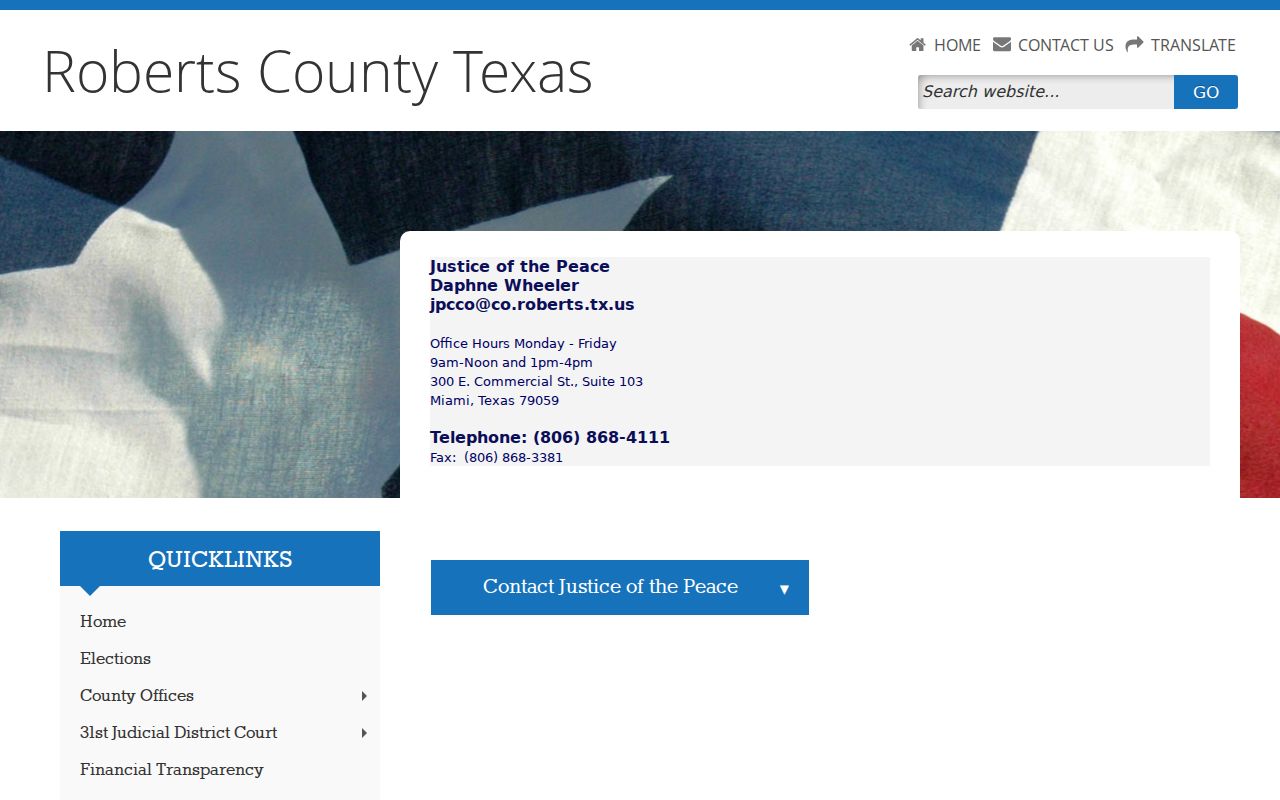
The countywide JP page lists its office in Suite 103 at 300 E. Commercial in Miami and publishes split weekday hours. It handles many traffic and other fine-only cases. Ask the clerk whether the missed date was in that court, whether required notice was sent, and what order appears in the case. No local fee schedule or case-specific FTA form was found.
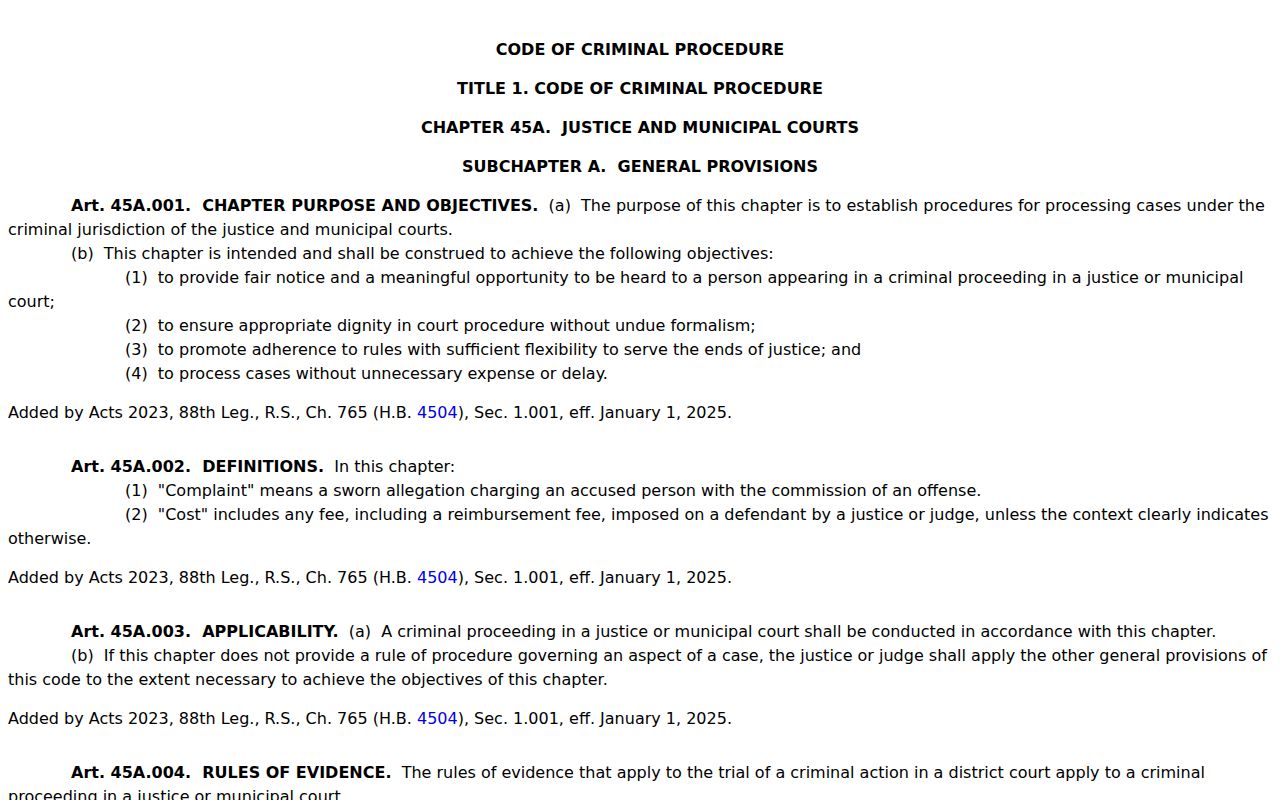
The current Texas Code of Criminal Procedure Chapter 45A governs justice and municipal court procedures.
Call the JP before visiting to confirm the right docket and current schedule.
How Roberts County Bench Warrants Are Issued
The judge acts within the court's authority after the required process for the case. Chapter 45A includes notice rules for justice and municipal court failure-to-appear matters and provisions for a court to recall an order in defined circumstances. The research did not find a Roberts County local rule describing an added grace period, reminder, or walk-in recall docket.
Once issued, the order belongs to that court's case. The sheriff may be asked to execute it, but a statewide citation-compliance record is not the same as the court's warrant status.
Notice Rules Set No Roberts County Bench Warrant Grace Period
State law contains notice-before-warrant provisions for justice and municipal court cases. The public county sources do not say whether a local court adds a reminder, how it sends one, or what grace period applies to a particular docket. Ask the clerk what notice was sent and what hearing or recall step is available. A reminder message and a judicial warrant decision are different events.
The statewide court reminder program has no documented Roberts County enrollment in this research.
Bench Warrants and Arrest Warrants Compared
A bench warrant concerns a missed obligation in an existing court matter; an arrest warrant is issued on a probable-cause showing tied to an alleged offense. Both may authorize custody, but their triggers and records differ. Ask the clerk which case and court the document names. See the Roberts County arrest warrant page for the separate probable-cause process.
| Feature | Bench Warrant | Arrest Warrant |
|---|---|---|
| Trigger | Missed court obligation in an existing matter | Probable cause concerning an alleged offense |
| Issuing authority | Judge of the court holding the case | Magistrate with jurisdiction |
| Record route | Clerk of the court where the setting occurred | Court and law-enforcement records |
| Next step | Ask that court about appearance or recall | Ask counsel and issuing court about process |
Capias Pro Fine Is Separate From a Roberts County Bench Warrant
A failure-to-appear warrant and a capias pro fine are related to court compliance but are not interchangeable labels. In Texas, the capias pro fine follows judgment and failure to discharge a fine through the legal process. Chapter 45A also addresses payment, inability-to-pay options, and voluntary appearance. The judge applies those rules to the case; Roberts County's sources do not publish a fixed local amount or automatic outcome.
Read the current Chapter 45A text for the state procedure.
Ask the JP which part of the law applies to the case in front of it.
Resolving a Roberts County Bench Warrant
There is no county-published walk-in, bond, or recall form. The issuing court must confirm the order and tell you which resolution options are available. Ask whether counsel can appear, whether a personal or cash/surety bond is needed, and what underlying obligation remains. These are questions, not promises that every option is offered in every case.
- Call the court named in the notice and confirm the current order and case.
- Ask a Texas attorney about a voluntary appearance or motion to recall.
- Ask the court whether a hearing, bond, or reset is required.
- Resolve the underlying case obligation and request written or docket proof.
Caution: Do not treat an old missed date as closed; confirm the court record and get legal advice before deciding how to appear.
Roberts County Bench Warrant Recall and Bond Details Are Unpublished
The research located no local bond amount, accepted-payment list, surrender window, remote-appearance rule, or warrant-specific recall form. The JP page has ordinary public hours, but those are not a warrant window. Before traveling, call the court to confirm its current procedure, what papers to bring, and whether the judge requires an appearance.
For a possible Miami city citation, call the city first to confirm whether a municipal-court file exists; the current state directory did not list Miami.
Keep Proof of a Roberts County Bench Warrant Clearance
After an appearance, payment, or other court-approved step, ask what confirms the warrant was recalled or the case was otherwise resolved. A receipt may show payment without establishing that every case condition ended. If DPS reported a traffic matter, ask when the court sends compliance and check that state record separately. Keep the case number, clerk's office name, and date of confirmation together.
Finding the Court That Issued the Warrant
The court named in the case controls its warrant. Roberts County's verified lower-court contact is the countywide JP, while county-court records and 31st District Court files route through the combined County/District Clerk. The district court's local contact is in Wheeler, apart from the Miami courthouse. A city-court matter stays with the city if an active local function holds it.
When the court is unclear, use the notice or citation to ask the sheriff or clerk for a referral. The sheriff may confirm execution information; only the issuing court can decide recall or disposition.